Oil and Gas Royalty Investment: A Guide to Returns and Yields

Investing in mineral rights and royalties has long been considered one of the most stable ways to build generational wealth. However, for many landowners, understanding the actual oil and gas royalty investment potential of their property remains a challenge. When you move beyond the surface level of ownership, you enter a world of complex calculations, market variables, and long-term financial planning.
If you are currently wondering what happens if you find oil on your property, the value of your asset isn’t just in the ground—it’s in the specific terms of your royalty interest and the efficiency of the production.
Understanding Oil and Gas Royalty Investment Returns
When we talk about oil and gas royalty investment returns, we are referring to the passive income generated by the production of natural resources. Unlike a working interest, where you share in the costs of drilling and operation, a royalty interest allows you to receive a share of the revenue without the liability of operational expenses.
The total return on your investment is typically influenced by three primary factors:
- Market Price: The fluctuating price of crude oil and natural gas on the global market.
- Production Volume: How many barrels of oil the well produces daily.
- Decline Curve: The natural decrease in a well’s production over time.
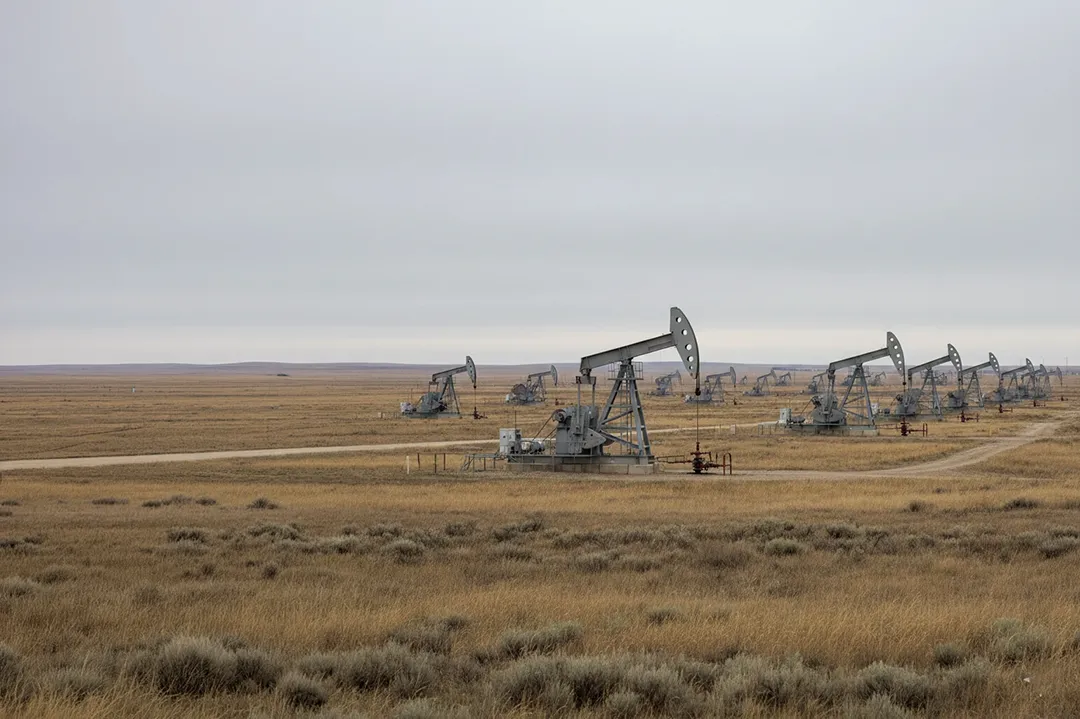
What is a Typical Percentage Yield?
One of the most frequent questions we receive at B.J. Kadrmas, Inc. is: “What is a fair percentage?” In the context of an oil and gas royalty investment, the “yield” is the portion of the total production revenue that belongs to you.
Historically, the standard royalty was 1/8th (12.5%). However, in highly productive areas like the Bakken formation, modern leases often command higher percentages, such as 3/16ths (18.75%) or even 1/4th (25%).
To understand your true yield, you must distinguish between:
- Gross Royalty: Your share before any deductions.
- Net Revenue Interest (NRI): Your actual share after post-production costs (gathering, transportation, treatment) are subtracted.
Tax Advantages: The Depletion Allowance
A significant benefit of an oil and gas royalty investment is the Depletion Allowance. Because oil is a finite resource that depletes over time, the IRS allows mineral owners to reduce their taxable income.
- Statutory Depletion: Most individual royalty owners qualify for a 15% fixed deduction from their gross royalty income.
- Tax Shield: This effectively means that 15% of your energy income is tax-free, significantly boosting your actual net yield compared to traditional real estate or stock dividends.
The Role of Mineral Rights in a Financial Portfolio
An oil and gas royalty investment serves as an excellent hedge against inflation. Because energy prices often rise alongside the cost of living, royalty owners see their income increase during inflationary periods. Furthermore, mineral rights are “real property,” providing tangible security that paper stocks lack.
The longevity of these returns is also a major draw. A single well can produce for 20 to 30 years, and with advancements in recovery techniques, many older wells are seeing a second life, extending payments for another generation.

How to Calculate Your Oil Royalties
The basic formula used by operators to determine your monthly check is:
(Production Volume x Price) x Royalty Decimal = Gross Payment
For example, if a well produces $100,000 worth of oil in a month and you have a 3/16th (0.1875) royalty interest, your gross check would be $18,750. You must also account for state severance taxes and any “post-production” deductions.
How to Verify Your Production Data
Never rely solely on the operator’s statement. As a royalty owner, you should independently verify production volumes.
- Official Resource: In North Dakota, you can publicly track the production data of every well through the North Dakota Department of Mineral Resources.
- Cross-Referencing: If your check’s reported volume differs from the state’s official records, it may be time for a professional mineral audit.
Legal Protections and Financial Security
You cannot have financial security without legal certainty. Your oil and gas royalty investment returns are only as strong as the title that supports them. If there is a cloud on your title, an operator may place your royalties in “suspense” until the issue is resolved.
This is where the legal concept of mineral estate dominance comes into play. You must ensure that your rights are clearly established so that no surface disputes interfere with your subsurface financial interests.
Warning Signs of a Bad Lease Agreement
When analyzing your potential yield, watch for these “red flags”:
- Broad Deductions: Agreements that allow the operator unlimited “marketing costs” can drastically shrink your check.
- No Shut-in Royalty Clause: This ensures you receive minimal payments even if a well is temporarily closed due to market prices.
- Warranty of Title: Avoid clauses where you guarantee the title; let the operator perform their own due diligence.
Expert Advice: Diversification Within Your Portfolio
In the world of oil and gas royalty investment, diversification is key to managing risk:
- Geographic Spread: Owning rights across different counties or states (e.g., ND and Wyoming) protects you from regional pipeline issues.
- Operator Mix: Having multiple companies operating on your land shields you from the financial instability of a single operator.

Why Professional Valuation is Critical
Many landowners leave money on the table because they don’t know the “Fair Market Value” of their assets. Whether selling rights or negotiating a lease, a professional appraisal is necessary. At B.J. Kadrmas, Inc., we use historical data and market trends to provide an accurate valuation, moving you from guessing to knowing your property’s potential.
Conclusion: Maximizing Your Investment Potential
From initial discovery to the monthly arrival of a royalty check, the journey of an oil and gas royalty investment is both a legal and financial marathon. By focusing on high-quality title research, tax advantages like depletion, and favorable lease negotiations, you can ensure your yield reflects the true value of your property.
Are you receiving the correct royalty payments? Contact B.J. Kadrmas, Inc. today for a comprehensive mineral appraisal and title review to protect your financial legacy in the Williston Basin.