Mineral Estate Dominance: Understanding Your Legal Rights

Mineral Estate Dominance: Understanding Your Legal Rights
The relationship between surface ownership and mineral ownership is one of the most complex aspects of property law in the United States. Mineral estate dominance is the legal principle that dictates how these two interests interact, often giving the mineral owner specific rights to use the surface for exploration and extraction. For landowners in states like North Dakota and Montana, understanding this hierarchy is essential to protecting your property and your financial future.
If you are wondering what happens if you find oil on your property, your very first priority must be determining who owns the rights to what lies beneath your feet.
What is Mineral Estate Dominance?
In the legal world, property is often described as a “bundle of sticks.” Each stick represents a different right, such as the right to build a house, the right to farm, or the right to extract oil and gas. When a property is “severed,” the mineral rights are separated from the surface rights.
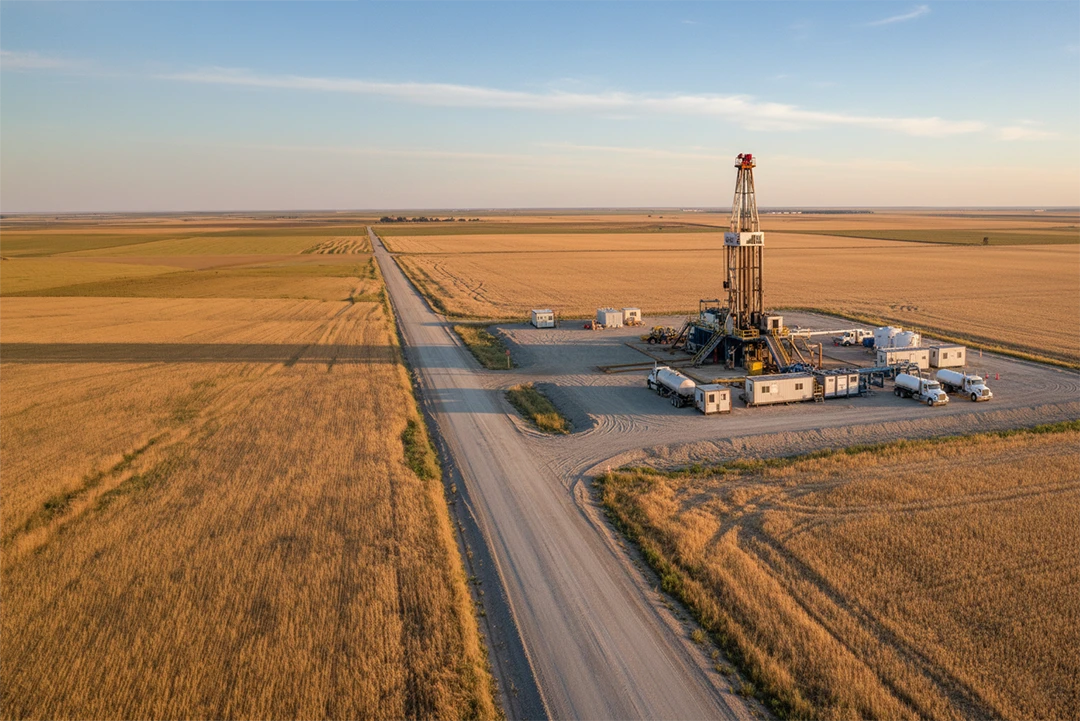
The doctrine of mineral estate dominance establishes that the mineral estate is the “dominant” estate, while the surface estate is “servient.” This means that the owner of the mineral rights (or the company they lease those rights to) has an implied legal right to use the surface as much as is “reasonably necessary” to access the minerals. Without this dominance, the ownership of minerals would be practically worthless, as the owner would have no way to reach their assets.
Common Misconceptions About Severed Mineral Rights
Through our 40 years of service at B.J. Kadrmas, Inc., we’ve noted that landowners often operate under significant misunderstandings regarding mineral estate dominance:
- “I bought the land, so I own the oil”: In 90% of cases in the Bakken region, minerals were severed decades ago. Buying the surface does not guarantee ownership of the resources beneath.
- “I can stop the drilling”: A surface owner can rarely block drilling entirely if a valid lease exists, but they can significantly influence where and how it happens.
- “The oil company doesn’t have to pay for roads.” While they have the right to build them, they are legally obligated to compensate you for the permanent damage and loss of use of that land.
The Evolution of Surface and Subsurface Rights
Historically, the law favored the mineral owner almost entirely. In the early days of the Bakken formation and other major plays, surface owners often felt they had little say when a drilling rig appeared in their backyard. However, modern law has evolved to create a more balanced approach.
While mineral estate dominance remains the foundation of energy law, it is now tempered by several legal protections for the surface owner:
- The Accommodation Doctrine: This requires mineral owners to accommodate existing surface uses if there is a reasonable alternative for oil and gas operations.
- The Due Care Standard: The mineral owner cannot use more of the surface than is necessary, nor can they act with negligence.
- State-Specific Statutes: Legislation like the North Dakota Surface Owner Protection Act.
The Legal Rights of Mineral Owners
When a lease is signed, the operator (the oil company) steps into the shoes of the mineral owner. Under the rule of mineral estate dominance, they generally have the right to:
- Construct Roads: To move equipment and personnel to the well site.
- Drill Wells: Including the pad sites and necessary infrastructure.
- Install Pipelines: To transport the produced oil or gas.
- Use Ground Water: In some jurisdictions, for the purpose of drilling operations (though this is highly regulated).
State-Specific Regulations: The North Dakota Surface Owner Protection Act
While mineral estate dominance is a federally recognized concept, states have the power to enact laws that provide a safety net for surface owners. North Dakota is a leader in this area with specific statutory protections:
- Notice of Operations: Operators must provide the surface owner with a notice of operations at least 20 days prior to starting any work.
- Compensation for Damages: The law explicitly requires operators to pay the surface owner for loss of agricultural production, lost value of the land, and damage to personal improvements.
- The “Reasonable Use” Dispute: If an agreement cannot be reached on what constitutes “reasonable use,” North Dakota offers a mediation process through the Department of Agriculture.
How Surface Owners Can Protect Their Interests
Just because the mineral estate is dominant does not mean the surface owner is powerless. The key to protection lies in the Surface Damage Agreement (SDA).
An SDA is a contract between the surface owner and the oil company that outlines exactly how the surface will be used, how much the owner will be paid for the disturbance, and how the land will be reclaimed after operations cease. By proactively addressing mineral estate dominance in these agreements, you can define:
- Specific routes for access roads to minimize field bisection.
- The location of well pads to protect prime grazing land or water sources.
- Requirements for fencing, gates, and dust control.

Step-by-Step: What to Do When an Operator Claims Mineral Estate Dominance
If a landman or operator contacts you citing mineral estate dominance, follow these steps to protect your property:
- Verify the Title: Never take a company’s word for it. Professional Title Research is required to confirm that the party claiming rights actually holds the dominant estate.
- Map Existing Infrastructure: Document all existing roads, fences, and water wells. This is your baseline for “accommodation” negotiations.
- Negotiate the SDA: Do not allow access until a signed agreement is in place. It should cover everything from the type of gravel used for roads to full land reclamation.
- Consult a Land Service Professional: Experts who understand local geology and laws (like our team in Dickinson) can determine if an operator’s plan is truly “reasonably necessary.”
Navigating the Challenges of Severed Minerals
A “severed” estate is the most common scenario where mineral estate dominance becomes a point of contention. This happens when a previous owner sold the land but kept the minerals, or vice versa. If you buy land today, you might not even realize that someone else owns the right to drill on it.
This is why professional land services are vital. Understanding the chain of title and the specific language in old deeds can reveal hidden burdens on your property. If the deed does not explicitly waive mineral estate dominance, the law defaults to the dominant status of the minerals.
Finding the Balance: Ethics and Integrity in Land Services
The goal of energy development should always be a “win-win” for both the surface and mineral owners. While the law provides the framework of mineral estate dominance, the best operations are built on transparency and mutual respect.
As a legacy land service company, B.J. Kadrmas, Inc. prides itself on upholding Midwestern values. We believe that even though the mineral estate has legal priority, the surface owner’s legacy and livelihood deserve equal protection through fair negotiation and expert guidance.
Final Thoughts: From Legal Rights to Financial Rewards
Understanding your legal standing is the foundation of any energy-related project. Once you have navigated the complexities of mineral estate dominance and secured your surface rights, the focus naturally shifts from protection to profit.
For those looking to understand the financial side of ownership, our guide on oil and gas royalty investment returns explains what kind of yield you can realistically expect from your assets.
Do you need to verify your mineral title or negotiate a surface agreement? Contact B.J. Kadrmas, Inc. today to ensure your legacy is protected by the most experienced land service team in the Williston Basin.