North Dakota Pore Space Rights: What CO₂ Storage Operators Need to Know
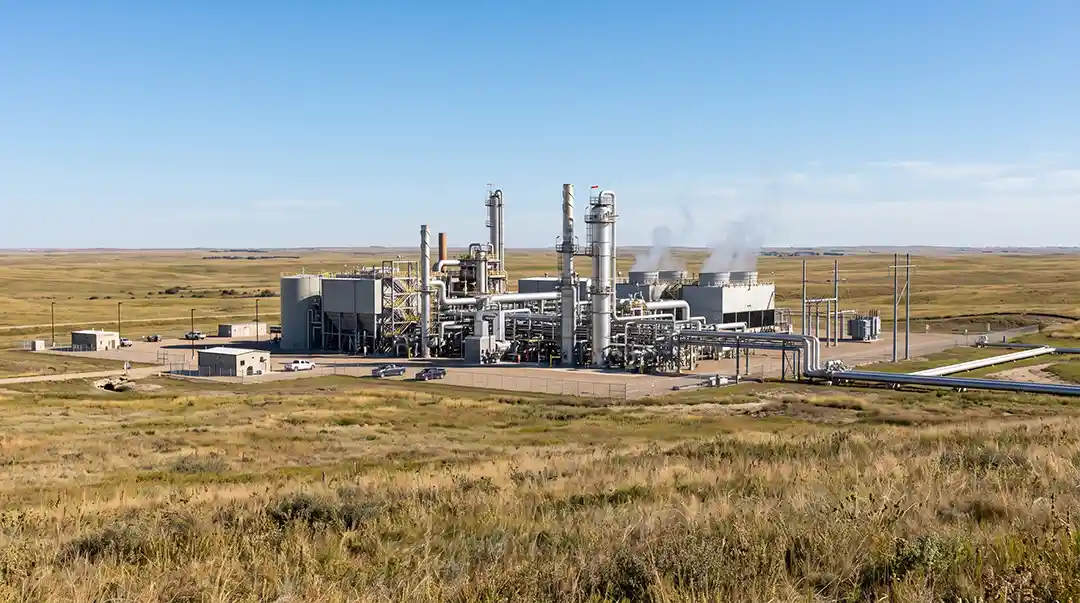
On April 24, 2018, it became the first state to receive Class VI primacy from the Environmental Protection Agency (EPA). This granted state regulators the authority to permit geologic sequestration wells, except for projects on Indian lands. However, while the regulatory and technological frameworks are established, securing North Dakota pore space rights remains a significant challenge. Navigating the complex legal landscape of subsurface ownership has become a critical part of planning and developing any CCS infrastructure project.
Disclaimer: The following article provides industry analysis and educational information regarding carbon capture and storage and land services. It does not constitute legal advice. Please consult with a qualified attorney for specific legal matters.
What Is Pore Space and Who Owns It in North Dakota?
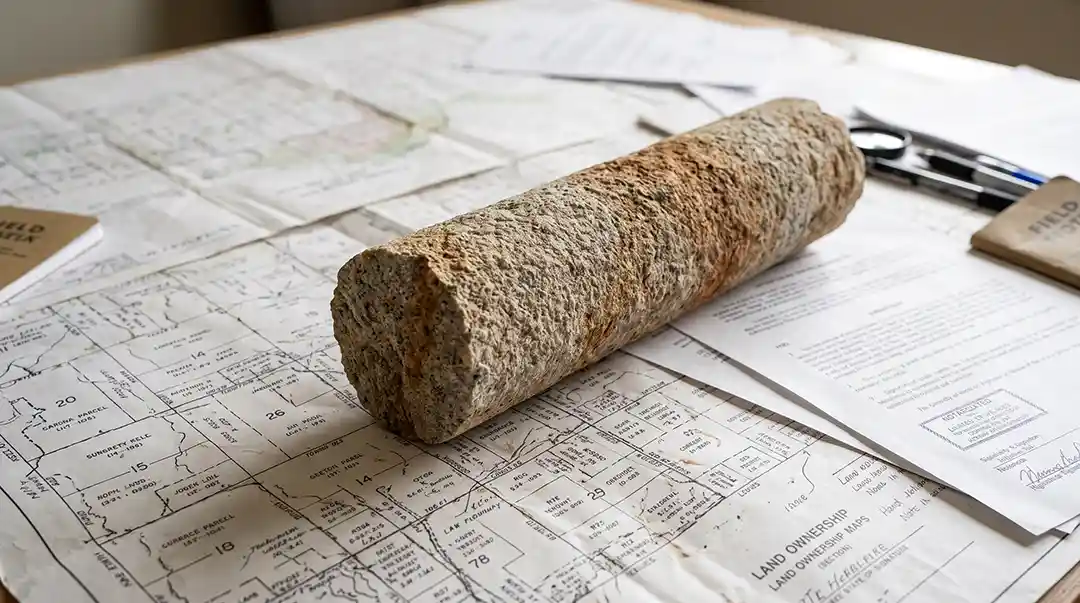
In carbon capture, pore space refers to the microscopic voids within appropriate underground geologic formations. Operators can safely inject and contain CO₂ within these spaces.
Under North Dakota law (N.D.C.C. § 47-31-03), North Dakota pore space generally belongs to the overlying surface owner. The state enacted legislation (§ 47-31-05) to prevent further fractionalization. This law prohibits severing pore space from the surface estate after April 9, 2009. Any legal instrument attempting to do so after this date is void in that regard. However, the law explicitly protects historical transactions (§ 47-31-07), meaning any severance that occurred prior to April 2009 remains legally valid. While outright new severance is banned, leasing the pore space for storage (§ 47-31-06) is fully permitted.
Recent North Dakota Court Decisions on Pore Space Rights
The legal framework governing pore space has been heavily tested in recent years:
- 2022 (Northwest Landowners Association v. State): The North Dakota Supreme Court affirmed that surface owners have constitutionally protected property interests in subsurface pore space. The decision invalidated specific statutory provisions. Those provisions would have allowed certain oil and gas disposal operations to use that space without the owners’ consent or compensation. The Court ruled that injecting substances constitutes a physical occupation of property. Allowing this without compensation is an unconstitutional taking.
- 2025 (NWLA v. State): The North Dakota Supreme Court reviewed constitutional challenges related to the state’s pore space amalgamation process. Rather than issuing a final resolution, the Court remanded several constitutional questions back to the lower courts.
- December 2025: A district court ruled on an NWLA lawsuit regarding compulsory inclusion of nonconsenting landowners. The court found this statutory mechanism unconstitutional because it failed to guarantee just compensation determined by a jury.
- March 2026: Following the December ruling, a separate district court officially voided storage permits that had been issued to Summit Carbon Solutions based on those compulsory mechanisms.
- August 2026: Summit Carbon Solutions announced it would no longer pursue two of its three planned North Dakota storage facilities. The company cited “business judgment” and indicated plans to transport CO₂ to storage sites in Wyoming. The company continues to pursue its third North Dakota storage area while related appeals remain ongoing.
Pore Space Amalgamation and Landowner Consent
North Dakota’s statutory framework allows the Industrial Commission to approve “amalgamation”—the pooling of storage rights to create a unified geologic storage reservoir. By statute (N.D.C.C. § 38-22-08), this requires obtaining the consent of persons who own at least 60% of the storage reservoir’s pore space.
However, recent court challenges have created severe uncertainty around this framework. For instance, Summit Carbon Solutions had successfully secured voluntary agreements covering approximately 92% of its original 90,000-acre project footprint, yet a court still voided its storage permits. These legal uncertainties may encourage operators to pursue broader voluntary landowner participation rather than relying primarily on compulsory amalgamation mechanisms.
Legal and Financial Risks for CO₂ Storage Operators
Unresolved North Dakota pore space rights can create significant uncertainty for CCS developers. Disputes over ownership, landowner consent, or storage authorization may delay permitting, disrupt construction schedules, and increase project holding costs.
These delays directly affect financial planning. Federal Section 45Q tax credits provide significant incentives for qualifying carbon capture projects. However, eligibility depends on specific statutory requirements. This includes a deadline to begin construction before January 1, 2033. Prolonged disputes may postpone when a project begins generating qualifying credits. This delay can negatively affect projected revenue and financing arrangements.
Key Land Rights Required for CO₂ Storage Projects
Operators must systematically acquire and document distinct property rights:
- Pore Space Leases: Contracts granting the right to inject and store CO₂ within the subsurface formations.
- Surface Use Agreements: Agreements compensating the landowner for the physical footprint of injection wells and facilities.
- Pipeline Rights-of-Way: Easement corridors required to transport the CO₂.
- Testing and Monitoring Access: Legal access required for seismic surveys and long-term monitoring wells.
- Mineral Owner Considerations: Under § 47-31-08, the state’s pore space laws do not alter the common-law dominance of the mineral estate. Operators must evaluate active mineral leases to ensure CO₂ storage will not interfere with viable mineral extraction. The exact relationship between mineral and pore space rights on a specific tract depends heavily on its unique ownership history.
How Professional Land Services Support CO₂ Storage Development
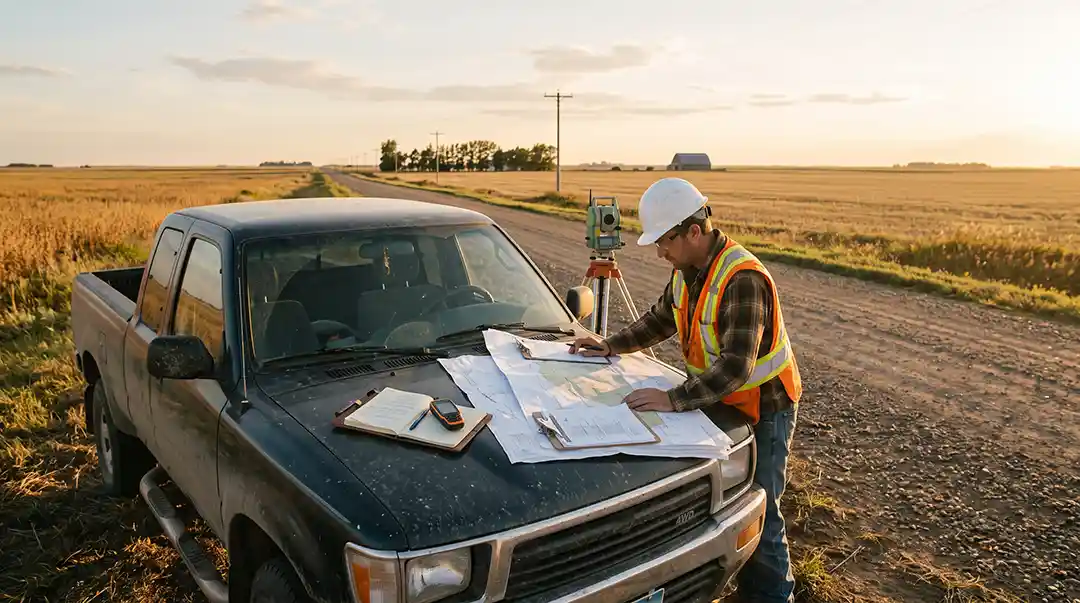
Because North Dakota law protects historical pore space severances established before April 2009, identifying current surface owners is only the first step. Developers cannot assume that a modern surface deed automatically includes the underlying storage rights.
For large-scale CCS developments, title research must account for potentially hundreds of individual tracts. This includes historical conveyances back to original government land patents, ownership changes, and existing property interests. Identifying discrepancies early allows project teams to prioritize further investigation and coordinate with legal counsel. This helps develop a reliable acquisition strategy before critical project milestones.
Professional land services help CCS developers identify ownership interests, document existing land rights, coordinate negotiations, and maintain accurate acquisition records throughout the project lifecycle.
Frequently Asked Questions (FAQ)
Who owns pore space in North Dakota? Pore space generally belongs to the overlying surface owner. However, if it was legally severed from the surface estate prior to April 9, 2009, that historical separation remains valid.
Is pore space amalgamation still allowed in North Dakota? While the statutory mechanism remains in the state code, recent district court rulings have challenged the constitutionality of forcing nonconsenting landowners into storage units, creating significant legal uncertainty awaiting Supreme Court resolution.
Can pore space be severed from surface rights? No new severances are allowed. North Dakota law prohibits severing pore space ownership from the surface estate after April 9, 2009. However, owners can lease their pore space to operators.
Addressing land rights early in the development process helps reduce uncertainty. If you are developing a carbon capture initiative, explore our Solutions for Businesses to see how B.J. Kadrmas Inc. can support your infrastructure project with comprehensive title research and professional land services.