Oil and Gas Royalties: What Are They and Why Do They Matter?

When you sign an oil and gas lease, you are not selling your land. Instead, you are entering into a long-term financial partnership where Oil and Gas Royalties become your primary source of ongoing income. By legal definition, Oil and Gas Royalties represent a negotiated percentage of the gross revenue generated from the extraction of hydrocarbons, paid to the mineral owner free of the costs of drilling and completing the well. Understanding how this mechanism works is the key to protecting your family’s subsurface wealth and ensuring you are fairly compensated.
The First Steps for Oil and Gas Royalties
When an energy company wants to drill on or near your property, a landman will present you with a lease offer. Your first step should be to understand the two different types of compensation involved. The “Lease Bonus” is a one-time, upfront cash payment per acre just for signing the contract. However, the real generational wealth comes from your Oil and Gas Royalties.
Never sign the first draft of a lease blindly. Your immediate priority is to locate your historical property deeds and confirm exactly what percentage of the mineral rights you actually own (as ownership is often split among heirs). This exact ownership percentage dictates the ultimate size of your future royalty checks.
How Are Oil and Gas Royalties Calculated?
Before a company issues your first check, they will send a legal document called a Division Order. This document converts your lease percentage into a precise decimal interest (known as Net Revenue Interest or NRI) for a specific well.
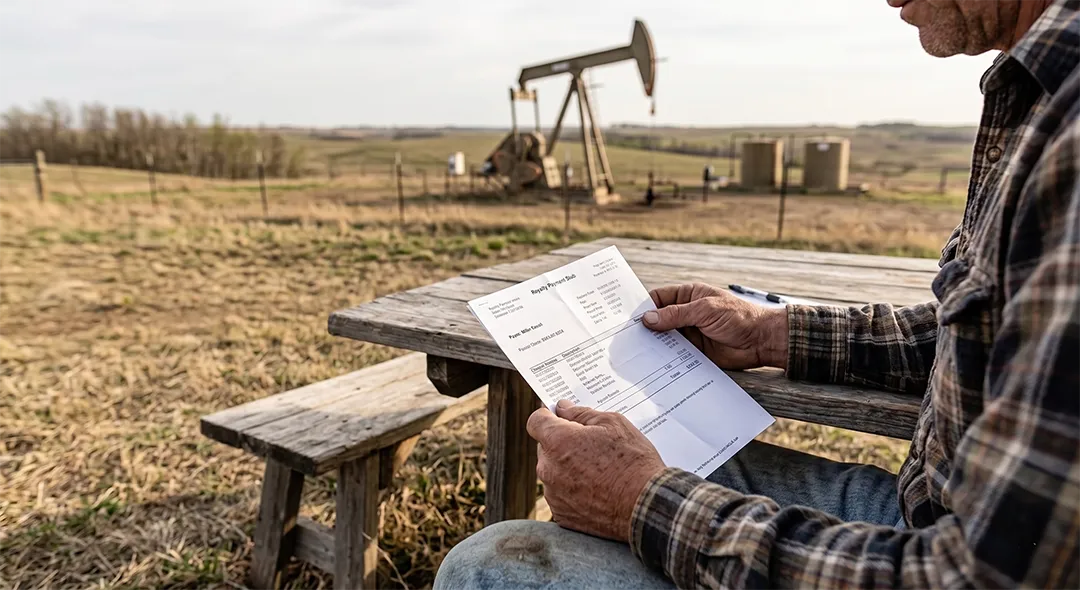
Your Oil and Gas Royalties are calculated based on three strict variables: your negotiated royalty rate (historically 1/8, but today frequently negotiated to 3/16, 1/5, or even 1/4 in prime areas), the market price of crude oil or natural gas during that production month, and the total volume extracted. Because payouts fluctuate with the market, mineral owners should regularly consult the official energy data provided by the U.S. Energy Information Administration (EIA) to track national production volumes and price forecasts.
Why Oil and Gas Royalties Matter to Landowners
The primary reason Oil and Gas Royalties are so valuable is the unique distribution of financial risk. Drilling a modern horizontal well in a region like the Bakken can cost an operator upwards of $10 million. The energy company bears 100% of this financial risk. As a mineral owner, you invest zero capital, yet you receive a guaranteed slice of the production revenue.
Furthermore, as long as the well continues to produce in paying quantities, your lease remains “Held by Production” (HBP). This means your Oil and Gas Royalties can provide passive income for decades, functioning as a powerful financial asset that can easily be passed down to future generations.
Beware of Deductions on Oil and Gas Royalties
While the law states that Oil and Gas Royalties are free from the costs of drilling and well completion, your paycheck can still be drastically reduced by what operators call “post-production costs.”
Energy companies often attempt to pass down the expenses associated with gathering, treating, compressing, and transporting the gas and oil to the market. If you sign a standard boilerplate lease, these deductions can eat up a significant portion of your income. It is highly recommended to negotiate a strict “Gross Proceeds” or “Cost-Free” royalty clause in your lease. For a deeper understanding of fair valuation and baseline federal standards regarding allowable deductions, landowners can review the valuation policies outlined by the Office of Natural Resources Revenue (ONRR).
Secure Your Oil and Gas Royalties with Clean Title
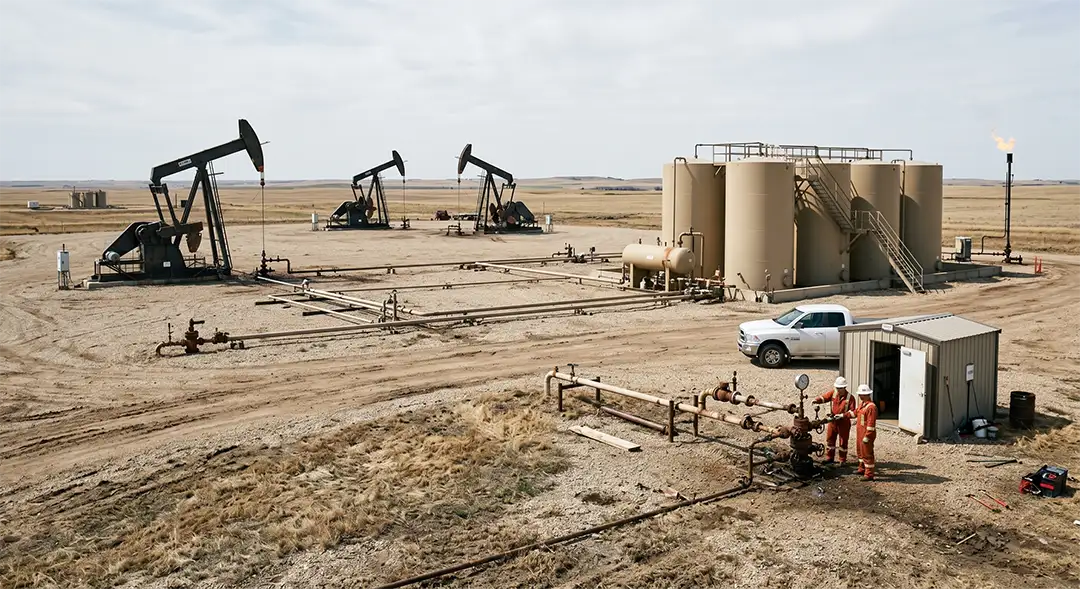
Even if you negotiate the perfect lease with the highest percentage, the operator will not pay you royalties if there is any cloud on your chain of title. If courthouse records show unresolved probate issues, missing deeds, or fractionalization errors, the oil company will legally withhold your funds and place them into a “suspense account” until the legal mess is sorted out.
This is where professional landmen step in. By utilizing expert oil and gas services, such as Title Curative and lease negotiation, you ensure that your ownership is legally airtight. Professionals clear up the courthouse paperwork so that you receive the exact compensation you are owed without delay.
Conclusion
Maximizing your Oil and Gas Royalties requires much more than just cashing a check in the mail. It demands a clear understanding of lease mechanics, a vigilant eye on post-production deductions, and flawless title documentation. By mastering these elements and working with industry experts, you actively protect your family.