AI in Oil and Gas: Why Technology Won’t Replace Our Crews
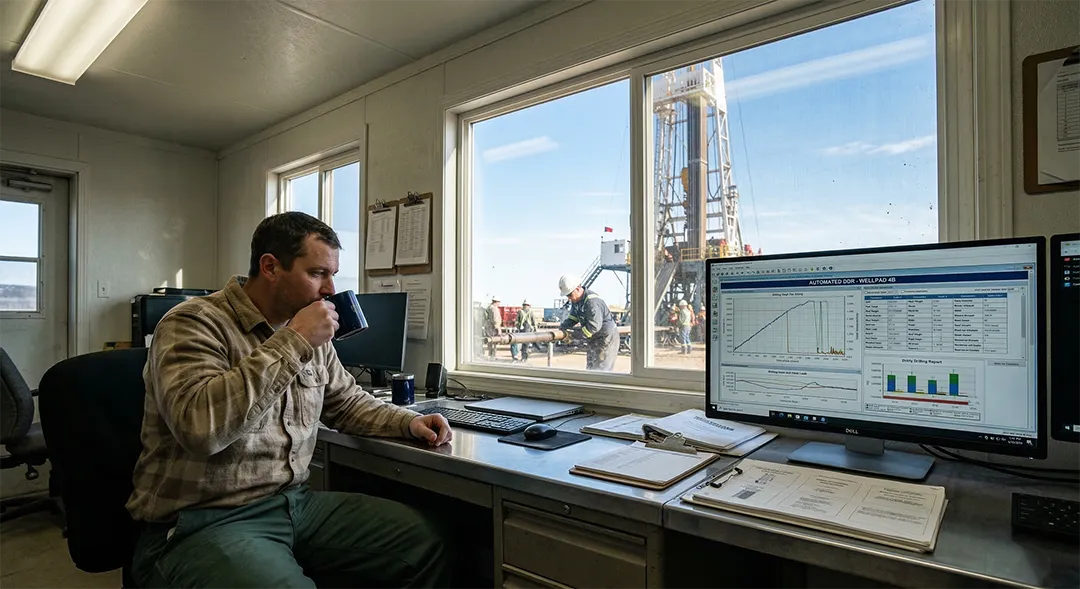
When discussing the rise of AI in oil and gas, the first and most important question every hardworking professional asks is: will this new technology eventually replace my job on the rig? The short, definitive answer is absolutely not. Artificial Intelligence is not a replacement for human workers; it is simply the most advanced tool we have ever put into the hands of our crews. Just as the hydraulic top drive didn’t replace the driller but rather made their job safer and more efficient, modern software is designed to support, protect, and empower the men and women working in the field.
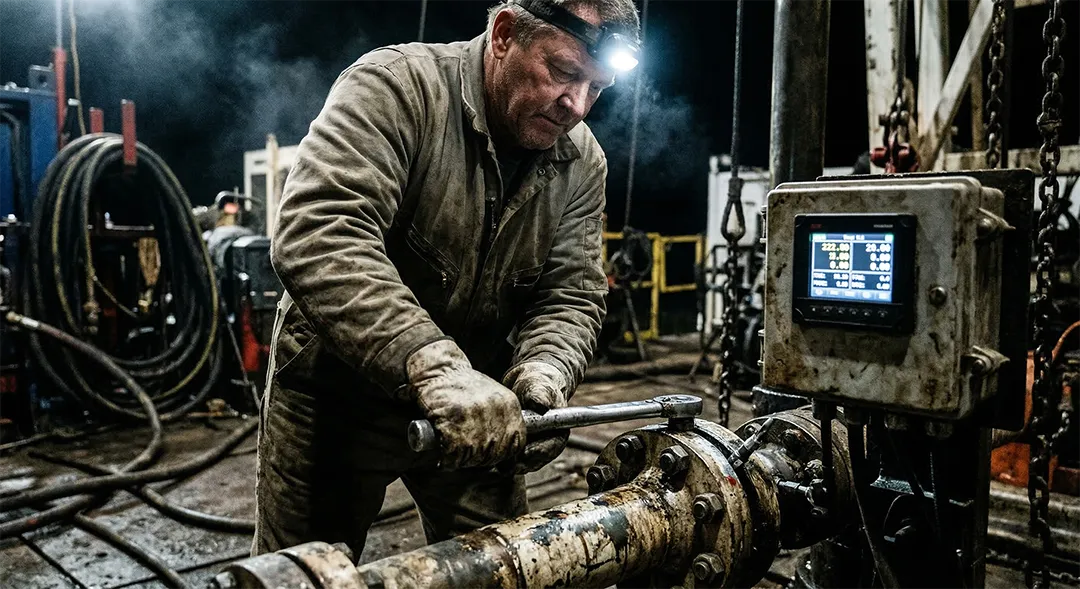
For companies operating in rigorous environments like the Bakken formation in North Dakota, the human element is the single most valuable asset. Artificial intelligence cannot turn a wrench, it cannot feel the subtle change in a drill string’s vibration, and it certainly cannot brave a -30°F winter day to keep operations running smoothly.
Instead of viewing technology as a threat, this guide will break down exactly how modern algorithms are being used today to eliminate tedious paperwork, enhance job site safety, and make our engineers more effective. By understanding the true role of AI in oil and gas, you can leverage these tools to advance your own career and secure your future in the industry.
The Real Role of AI in Oil and Gas Operations Today
To understand why jobs are safe, we must look at what this technology actually does. In 2026, AI in oil and gas is primarily a data-processing engine. A modern drilling operation generates terabytes of data every single day—from seismic readings and pressure logs to thermal imaging and flow rates.
Historically, petroleum engineers and geologists had to spend countless hours manually sorting through spreadsheets and raw data to find patterns. Today, advanced algorithms do that heavy lifting in seconds. The technology works in the background to organize complex geological datasets, highlight potential anomalies, and present a clean, readable dashboard to the human operator.
It does not make the final call on where to drill or how to adjust the mud weight. It simply provides a highly accurate map. The human engineer—relying on decades of hands-on experience and spatial awareness—reviews that map, considers the real-world environmental factors, and makes the authoritative operational decision. The software is the calculator; the human is the mathematician.
Eliminating the Busywork: How AI Frees Up Your Time
One of the most immediate, practical benefits of implementing these smart tools is the elimination of administrative busywork. Nobody gets into the petroleum industry because they love filling out compliance forms. Yet, administrative burdens have historically taken up a massive portion of a rig manager’s or engineer’s day.
Today, natural language processing and automated reporting tools handle the tedious aspects of the job. For example:
- Automated Daily Drilling Reports (DDRs): Instead of spending two hours at the end of a long shift manually compiling the day’s footage, mud properties, and operational delays, smart software automatically pulls data from rig sensors to draft the DDR. The supervisor simply reviews, approves, and signs off.
- Regulatory Compliance Tracking: Keeping up with state and federal regulations is complex. Software tools now track emissions data and operational logs in real-time, automatically formatting them to meet the strict reporting standards of agencies like the U.S. Environmental Protection Agency (EPA) which oversees North Dakota.
By taking over these repetitive tasks, the technology gives our crews their time back. It allows a supervisor to spend less time staring at a computer screen in the doghouse and more time out on the pad, mentoring junior crew members and actively overseeing extraction services.
Precision Extraction: Using AI in Oil and Gas as a High-Tech Compass
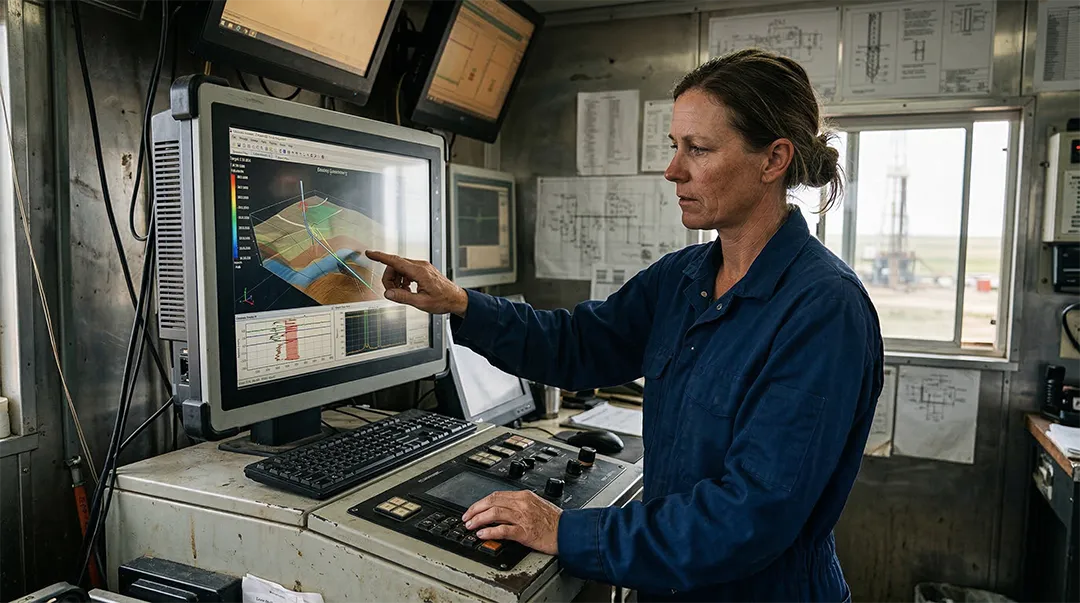
The Bakken is a complex geological formation, requiring highly precise horizontal drilling and hydraulic fracturing techniques to be economically viable. Here, we see the power of AI in oil and gas acting as a high-tech compass—specifically through advanced geosteering.
Geosteering involves adjusting the drill bit’s trajectory in real-time to stay within the most productive zone of the reservoir (the “pay zone”). Modern geosteering software utilizes machine learning algorithms to instantly compare real-time Measurement While Drilling (MWD) data—such as gamma-ray logs—against pre-drill geological models.
How this helps the crew:
- Reduces Guesswork: The software instantly visualizes the bit’s location within the rock layers, providing the directional driller with a clear 3D trajectory.
- Prevents Tool Wear: By optimizing the drilling path and avoiding unexpectedly hard rock formations, the software helps reduce the physical wear and tear on drill bits and downhole motors. This means fewer trips out of the hole, saving the crew from exhausting, labor-intensive pipe-handling operations.
- Maximizes Yield: Staying perfectly within the pay zone ensures that the well produces at its maximum potential, securing the financial success of the project and, by extension, the financial security of the company and its employees.
Enhancing Oilfield Safety: How Smart Tools Protect Our Crews
At companies like BJK, the health, well-being, and safety of our 40+ team members is the absolute highest priority. The most profound impact of AI in oil and gas is not in production speed, but in hazard prevention. This is achieved through a process known as Predictive Maintenance.
A drilling rig is a massive ecosystem of high-pressure pumps, top drives, drawworks, and generators. In the past, equipment was fixed after it broke (reactive maintenance) or serviced on a strict calendar schedule, regardless of its actual condition (preventative maintenance). Both methods carry risks of unexpected, catastrophic failures that can endanger workers.
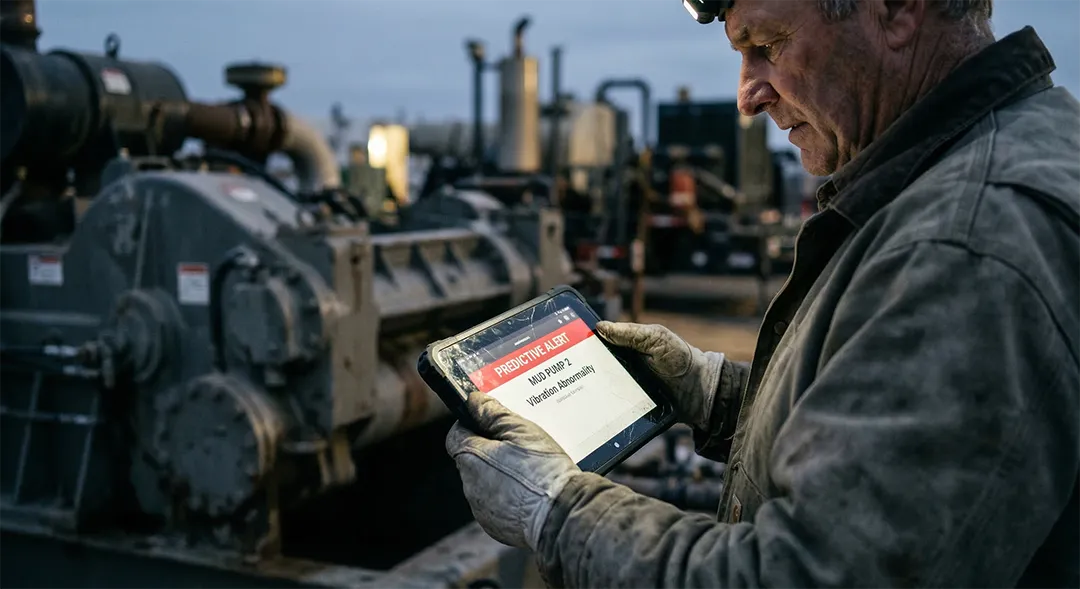
Today, critical rig components are fitted with IoT (Internet of Things) sensors that continuously monitor acoustic emissions, temperature fluctuations, and microscopic vibrations.
- The Process: The AI algorithm establishes a “baseline” of what a healthy mud pump sounds and feels like. If a valve begins to degrade, the vibration pattern changes slightly.
- The Alert: Long before the human ear can hear a problem, and weeks before the part actually breaks, the software sends an alert to the rig mechanic: “Check the pulsation dampener on Pump #2; it is showing early signs of fatigue.”
This technology aligns perfectly with the stringent safety protocols recommended by the Occupational Safety and Health Administration (OSHA), transforming the work environment from reactive to proactive. The AI doesn’t fix the pump—it relies entirely on the skilled mechanic to perform the repair—but it acts as an early warning system that prevents blowouts, equipment drops, and environmental spills, ensuring every worker goes home safely to their family.
The Ultimate Assistant: Why AI Needs Human Intuition to Work
It is crucial to understand the limitations of technology. An algorithm only knows what it has been programmed to analyze based on historical data. It operates in a vacuum of numbers. Oilfield operations, however, happen in the chaotic, unpredictable real world.
If a sudden blizzard rolls across the North Dakota plains, dropping temperatures and freezing pneumatic lines, the software cannot improvise. It cannot smell a faint hint of H2S gas before the alarms trigger. It cannot look a roughneck in the eye and realize they are fatigued and need a break.
The successful application of AI in oil and gas relies 100% on human intuition. The data provides a recommendation, but the rig manager provides the context. When the software suggests increasing the weight on bit (WOB), but the driller feels an unusual torque building up through the rig floor, the human instinct overrides the machine. This synergy—smart tools combined with irreplaceable human experience—is what makes modern American oil production the most efficient and reliable in the world.
Career Advice: Leveraging AI in Oil and Gas for Your Growth
Because technology is here to stay, the best thing any oilfield professional can do is learn to use it to their advantage. Those who embrace these tools will find themselves with greater job security, higher earning potential, and more leadership opportunities.
If you want to future-proof your career in the industry, here are actionable steps you can take today:
- Treat the Software as a Tool, Not a Mystery You don’t need to be a computer programmer or know how to write code to use AI. You just need to know how to read the dashboard. Ask your supervisors to train you on the predictive maintenance software or the new automated log systems. Familiarize yourself with the user interfaces. Being the person on the crew who knows how to quickly pull a digital report makes you an invaluable asset to your manager.
- Focus on “Data Interpretation” over Data Entry Since the software is now handling the data entry, shift your focus to what the data means. If the dashboard shows a consistent drop in pump pressure over three days, use your mechanical knowledge to diagnose why. The industry doesn’t pay people just to collect numbers anymore; it pays people to solve the physical problems those numbers reveal.
- Combine Tech with Traditional Mentorship If you are an experienced veteran, use your deep knowledge to “truth-check” the software. Teach the younger generation that while the screen might say one thing, they still need to go out and physically inspect the equipment. If you are new to the industry, use the data provided by these systems to ask better, more informed questions to your senior crew members.
By proactively adapting to these workflows, you ensure that you remain the most critical part of the operation. You can learn more about how we foster continuous learning, skill development, and robust job security by visiting our company culture and career opportunities page.
Conclusion: A Human-Led Future on the Rig
At the end of the day, the narrative that machines are taking over the oilfield is simply a myth. The integration of AI in oil and gas is an investment in the workforce, not a replacement for it.
Companies invest heavily in these advanced systems to make the demanding job of extracting North Dakota oil safer, cleaner, and less physically taxing. But the ultimate success of the Bakken, and the energy security of the entire United States, rests on the shoulders of the people. The 40-plus dedicated professionals at BJK, and thousands more like them across the country, are the true engine of this industry. As long as there is oil to be drilled and communities to be powered, human expertise, resilience, and intuition will remain completely irreplaceable.